

Salon, Beauty & Barber · Editorial resource
The “What If” Machine: Modeling Strategic Decisions Before You Commit Capital
How to read this article: Editorial operating analysis. Examples describe questions and possible patterns, not documented client outcomes.
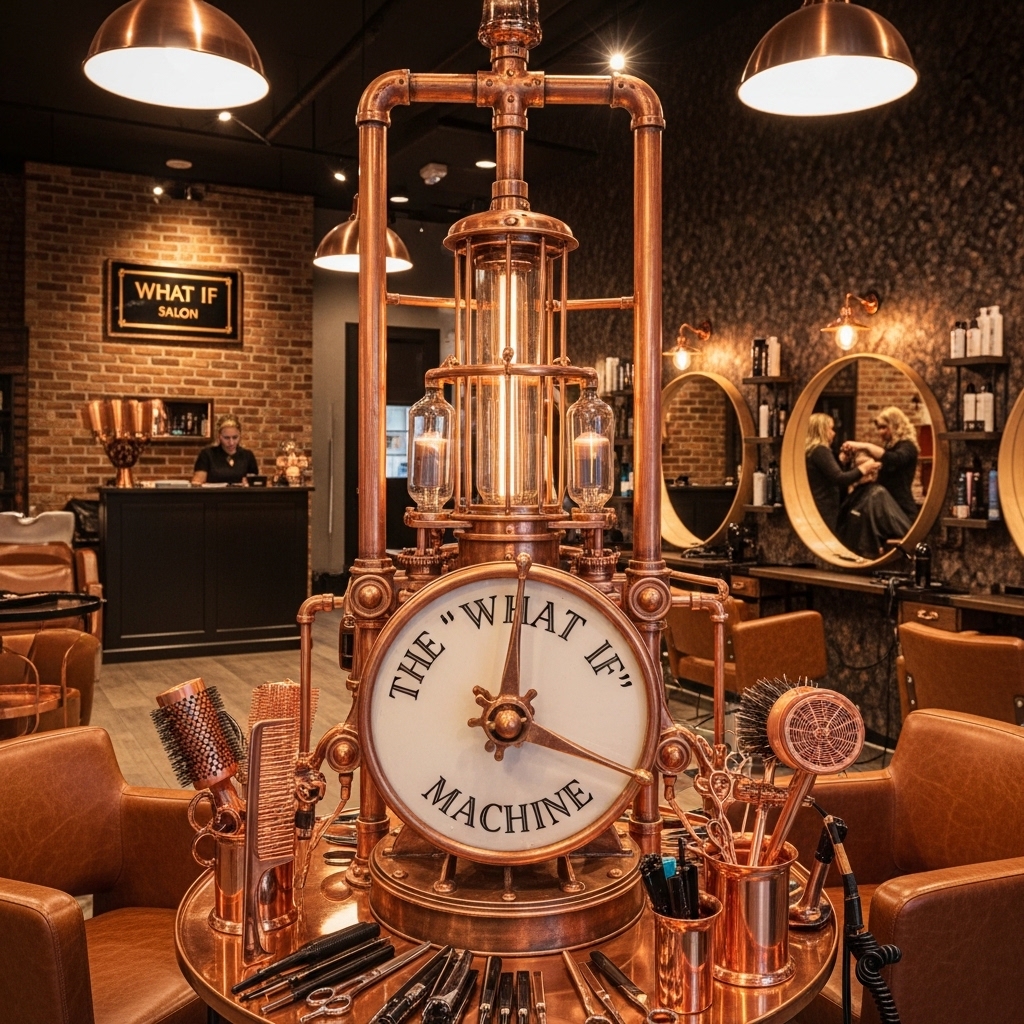
Appointment-based businesses are governed by high-leverage decisions. Adjust pricing. Modify operating hours. Remove or introduce services.
These decisions are often made intuitively. Intuition is useful, but it is not a control system. When the margin for error is thin, miscalculation is expensive.
The alternative is simulation.
From Retrospective Reporting to Forward Modeling
Historical reporting explains what happened. Strategic modeling estimates what might happen under stated assumptions when variables change.
With sufficient booking history, demand patterns, and client behavior data, operational changes can be stress-tested before implementation.
The output remains conditional: history may not represent a new price, schedule or market, and missing data limits the model.
Scenario 1: Pricing Adjustments
A 10 percent price increase raises an immediate question: does margin expansion outweigh potential volume contraction?
- Input variables: historical price sensitivity, rebooking elasticity, service-level retention patterns.
- Modeled outcome: projected change in revenue per booked minute, client attrition risk by cohort, service-level margin impact.
Test plausible demand responses rather than assume past data identifies price sensitivity. A modeled range is an input to a decision, not proof of the outcome.
Scenario 2: Operating Hour Reconfiguration
Closing a low-performing weekday. Opening a high-demand Sunday.
- Input variables: peak demand windows, missed call distribution, gap density by day, staff utilization ratios.
- Modeled outcome: net revenue impact, capacity integrity shift, marginal labor return by day.
Hidden demand often exists in under-analyzed windows. Conversely, perceived “busy days” may underperform structurally.
Scenario 3: Menu Rationalization
Removing a complex or low-yield service appears risky. The question is whether it destroys revenue or liberates it.
- Input variables: service pathway analysis, follow-on booking probability, revenue per booked minute by category.
- Modeled outcome: projected capacity release, margin redistribution, second-visit conversion impact.
Certain services consume disproportionate time while contributing minimal lifetime value. The model can flag services for review, but contribution, skills, client relationships and assumptions still need human judgment.
Show assumptions, ranges and sensitivity
A scenario model can estimate selected risks under stated assumptions. It does not quantify every risk or make uncertainty controllable. Label results as scenarios, not forecasts or client outcomes, and use probabilities only when evidence supports them.
Simple illustration: with a starting service price of $100 and 100 completed visits, gross revenue is $10,000. At $110, 95 completed visits would produce $10,450; 85 visits would produce $9,350. These are arithmetic scenarios, not predicted customer responses. Neither establishes contribution or profit without service costs.
Make demand response, staffing, service duration and direct costs explicit. Vary the assumptions that materially change the recommendation. For operating-hours or menu decisions, include capacity, service dependencies and the cost of reversing the change.
Choose a limited test with stop conditions, compare observed results with the scenario and revise the model. The useful question is which assumptions must hold for the decision to remain worthwhile.