

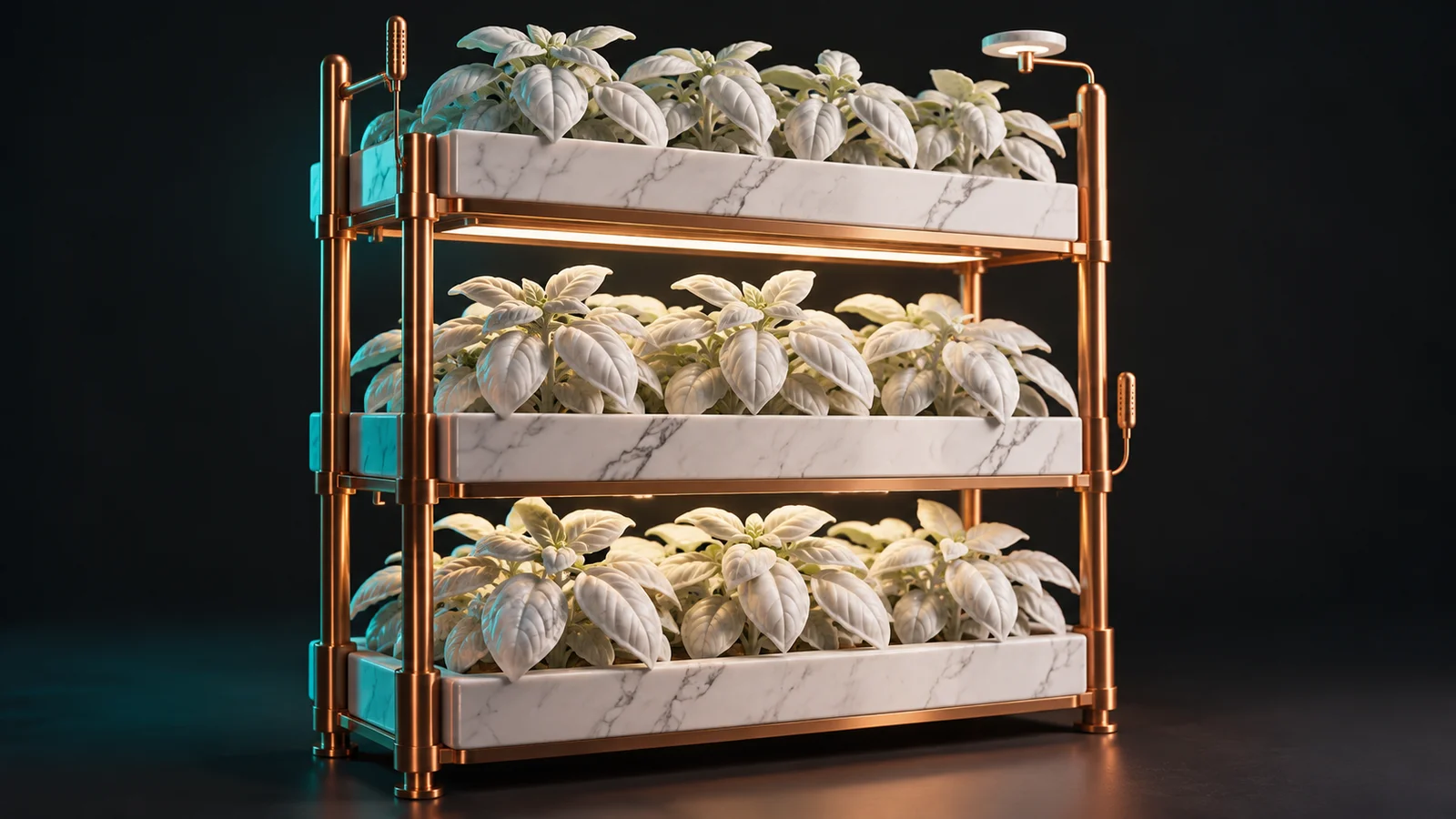
A vertical farm should measure the evidence a grower needs to understand the crop and make the next operating decision. Start with crop identity, stage and location, then choose relevant environmental, root-zone, equipment and outcome records. A larger sensor list is not automatically a better plan. Readings become useful when people know what they describe, when they apply and what response they can support.
Start with the question the grower needs answered
Consider a hypothetical indoor basil business preparing a crop-readiness review before its next cut. The grower wants a reliable picture of one batch, not a new automatic growing recipe. Staff already make crop walks, but their notes and the room dashboard cannot be matched confidently to the same plants.
- Operating question
- What evidence should accompany the grower's readiness review for this basil batch?
- Decision owner
- The grower retains crop assessment and any change to the approved growing plan.
- Missing connection
- Crop observations and equipment history cannot yet be tied to the batch's actual locations.
- First output
- A named batch record with relevant observations, trustworthy history and explicit gaps.
This scenario describes a proposed record design. It supplies no actual crop measurements, harvest result or recommendation to change light, water or nutrients. The readiness review is not a food-safety release or a customer delivery commitment.
For each proposed measurement, finish this sentence: someone will use this information to check a particular question. If nobody can name that person or question, keep the measurement off the first purchase list. A crop walk or an existing verified record may answer it more directly.
Keep the crop attached to its history
A rack address is not a crop identity. Plants can move, a tray can be split, and a later batch can occupy the same shelf. MP16-01 therefore needs a stable batch identifier and a dated location history before environmental records can be assigned to it.
| Record | What to preserve | Why it matters |
|---|---|---|
| Crop identity | Batch, cultivar and source record | A familiar crop name does not identify the same material |
| Stage | Actual sowing, transplant and relevant cut events | Calendar age alone does not establish crop condition |
| Location | Rack, shelf or zone with entry and exit times | A current address cannot explain earlier exposure |
| Observation | Observer, time, method and represented plants | A selected photograph may not describe the entire batch |
When a tray group splits, retain the parent batch and identify each resulting group and its own location history. Do not overwrite one shared address and imply that every plant moved together.
Retain corrections without erasing the received record. If the move time is unknown, mark that interval uncertain instead of assigning all earlier room readings to the current shelf. The useful result may initially be a shorter, defensible history rather than a complete-looking one.
Record light over time, not just at one moment
Purdue's daily light integral guide distinguishes an instantaneous plant-light reading from the amount accumulated during a day. That distinction helps specify the record without importing a lighting target for basil.
| Question | Useful record | Limit |
|---|---|---|
| What reached this point? | A suitable plant-light sensor at a documented canopy position | One point does not establish the whole growing area's exposure |
| What accumulated? | Daily light integral, or DLI, with its covered period | A missing interval prevents an unqualified full-day total |
| What did the system do? | Actual lighting state and timing | A command alone does not measure delivered light |
Keep sensor identity, position, units and data gaps with the light history. If staff move the sensor, preserve that event. The grower chooses the relevant locations and acceptable evidence with the facility team; this article does not prescribe spacing, light levels, duration or a control sequence.
Separate the room view from the root-zone view
The root zone is the plant's immediate growing environment below the shoot. A room-air reading, a shared supply-tank sample and an observation beside roots describe different places. Decide which one the question needs before buying a probe or naming a dashboard field.
- Canopy environment
- Relevant air temperature and humidity, with actual placement and represented area.
- Growing system
- Applicable water or substrate observations, linked to the named circuit and sampling point.
- Equipment evidence
- Relevant supply, flow or operating-state records when they can answer the selected question.
- Crop evidence
- A defined crop-walk observation alongside instrument readings, not replaced by them.
Minnesota Extension's hydroponics guide explains pH as acidity or basicity and electrical conductivity, or EC, as an indicator of dissolved salts. Those measurements answer different questions; neither is a complete assay of individual nutrients.
For MP16-01, retain whether a sample came from source water, a mixed supply or another defined point. Let the grower and appropriate specialists decide which additional measurements are justified. Carbon dioxide, dissolved oxygen or other variables should enter because a named decision needs them, not because a standard dashboard includes them.
Use the instrument's applicable care and verification instructions. Record cleaning, checks, calibration and replacement against its identity. A plausible number from an unverified or poorly located probe is not proof of the crop's condition.
Connect the readings to actions and equipment events
A trend needs a timeline of what happened around it. MP16-01 links observations to actual crop moves, inspections, service work and relevant equipment events. A planned activity and a completed activity must remain different records.
- Record the approved crop plan and the batch location at the start of the review period.
- Add actual equipment states and events with their source times.
- Attach completed crop work and inspections with the responsible person.
- Link later observations to that history, retaining uncertain intervals.
Preserve event time, time zone and receipt time so a delayed upload is not mistaken for a new event. Choose the sampling interval and acceptable age around the question being reviewed. Mark a stale or missing observation as such, not as a current normal condition.
For example, a maintenance ticket can say a light fitting was inspected without establishing when it resumed normal service. A controller can record an instruction without independently confirming the delivered condition. Preserve the distinction so a later reviewer does not mistake administrative closure for physical evidence.
Automate collection and basic consistency checks where useful. AI can help organize notes or identify a missing field, but an extracted event still needs a source and review where its meaning matters. Neither automation nor an AI summary should invent a crop move, repair a time gap silently or authorize a change to growing conditions.
Define the outcome before comparing performance
Environmental history alone does not tell the business whether the crop met its needs. Before the cycle ends, agree what will count as an outcome and how it will be recorded. Keep the grower's condition assessment separate from measured harvest quantity, grade decisions and customer acceptance.
- Crop result
- Named assessment or measured quantity, with batch, stage, time and method.
- Quantity basis
- Declared units and weighing boundary, rather than an unexplained yield figure.
- Resource boundary
- Which space, period, equipment and crop groups share the recorded use.
- Unresolved evidence
- Missing observations, shared-meter allocations and unverified outcomes remain labeled.
A room electricity meter may serve several batches and environmental services. Do not call its whole total the basil batch's energy use unless the boundary supports that statement. If use is allocated rather than directly measured, state the allocation method and its limits.
Water, nutrient use, labor and occupied space need equally clear boundaries. Choose only the measures relevant to this review, with compatible periods and units. Explaining differences between comparable cycles, forecasting harvest and reconciling harvested versus saleable quantities are later tasks, not answers produced merely by adding sensors.
Test one useful record before expanding the system
The first test is whether the grower can use one batch's evidence, not whether every dashboard tile has a number. Run a proposed read-only trial alongside the existing crop assessment. Define what the record must show before judging the trial.
- Trace a crop observation to the correct batch, place, stage and source.
- Confirm relevant sensor meaning, placement, units and verification status.
- Show gaps, crop moves and actual interventions without guessing.
- Check that outcome and resource boundaries support the intended comparison.
- Ask the grower what became answerable and what evidence is still missing.
If the record cannot support the question, correct that specific gap before broadening collection. Staff may need a clearer observation method or movement record rather than another sensor. Keep the established monitoring and response procedures active; this trial does not replace alarms or grant automated control authority.
Begin with one crop question and one accountable record. The aim is not to make the farm look data-rich. It is to give the grower a trustworthy view of the plants, the conditions they experienced and the evidence still needed for a useful decision.