

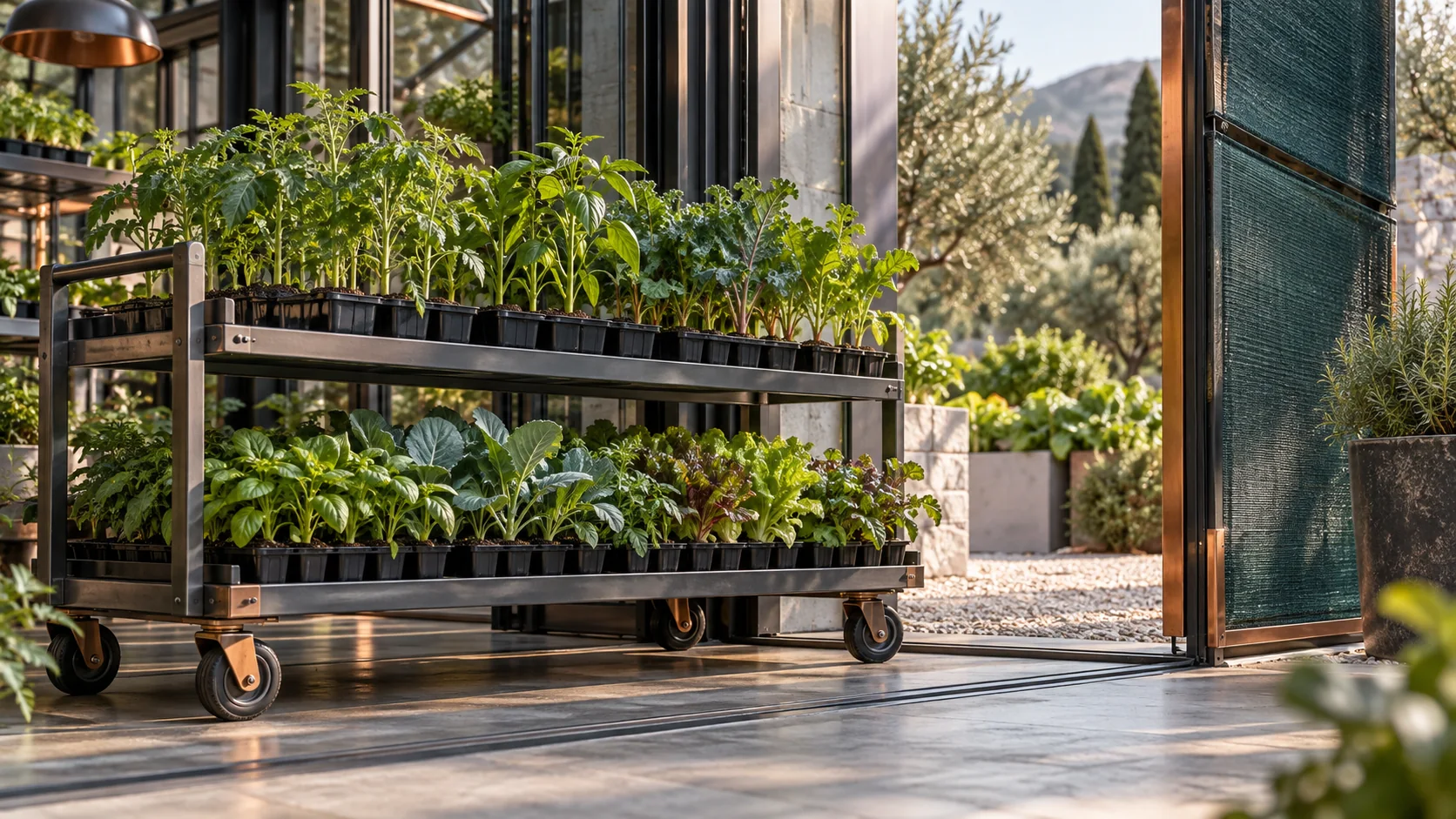
The delivery truck is booked, the customer expects plants, and the batch has reached its planned dispatch date. None of those facts establishes that greenhouse-grown transplants are ready for the conditions they will face after delivery.
Track hardening as a crop-specific transition with recorded exposure, observations, and a named release decision. Connect the nursery's history with the receiving conditions before dispatch. This is not a universal schedule or a recommendation to withhold water or expose every crop to the same temperature. It is a way to make the grower's readiness judgment visible and support a better handover.
Treat readiness as more than plant age
Hardening is the gradual acclimation of plants grown under protected conditions to the conditions they will encounter outside. University of Maryland Extension explains the process for vegetable transplants. Its guidance provides context, but the actual plan depends on crop, development, nursery conditions, weather, and the intended destination.
A batch can be old enough for the production schedule while still carrying an unresolved readiness concern. Conversely, a date change does not automatically mean a batch must stay longer under the same treatment. A qualified grower should interpret the plants and their history rather than let a calendar rule make the decision.
Record what the batch experienced, not just hardening complete. Moving a tray to a staging area, changing protection, and inspecting its response are different events. The record should preserve interruptions and deviations so a later reviewer does not mistake a planned exposure for one that actually occurred.
Connect nursery observations to the receiving site
Ask what is known about the receiving conditions and timing. A protected planting area and an exposed field are not interchangeable destinations. If weather or customer plans change, the grower may need to revisit readiness or agree a different dispatch arrangement.
Keep observed conditions separate from forecasts. A forecast is useful planning information, but it should retain its issue time and uncertainty. Do not rewrite the nursery history to imply that predicted weather occurred or treat a weather app as permission to release plants.
The receiving party also needs appropriate instructions and a way to report a concern. A delivery acknowledgment confirms a handover event; it does not prove successful establishment after planting. Define what the nursery is communicating without promising an outcome that depends on later handling and field conditions.
- Identify the batchLink the crop, tray group, order, and destination.
- Record the transitionKeep actual exposures and deviations from the approved plan.
- Review readinessCombine inspection with the known receiving conditions.
- Release the plantsRecord the grower's decision and receiving instructions.
Follow a batch with an interrupted transition
Consider a hypothetical vegetable nursery preparing batch T-36 for delivery. The nursery batch register is the source of truth for identity and the readiness record. The grower approves a crop-appropriate transition plan, and staff record the actual staging locations, exposure periods, protective arrangements, and observations.
One planned exposure is interrupted by changing conditions. Staff move the plants under the approved protection and record what happened. The system marks the planned step interrupted instead of copying the scheduled duration into the completed-history field.
The dispatch coordinator sees a transport booking but also an open grower review. The coordinator cannot clear that review merely to keep the truck full. The grower inspects the batch, considers its actual history and receiving conditions, and either approves dispatch, requests more observation, or discusses an alternative with the customer.
Suppose an illustrative order contains twelve trays, but two trays were in a different staging area and lack the same exposure record. Ten documented trays do not establish readiness for all twelve. Staff identify the two trays, investigate their history, and keep their status separate until the grower decides. If they cannot resolve the history, the record retains that limitation rather than borrowing the other trays' evidence.
Build a readiness and dispatch record
The useful record links:
- Identity: crop, variety, batch, tray group, production stage, and intended order.
- Transition plan: grower-approved approach and relevant crop-specific reference, without substituting a generic checklist.
- Actual history: locations, timing, protection, conditions, interruptions, and staff observations.
- Receiving context: destination, planned timing, known exposure, and unresolved customer information.
- Inspection: observed plant condition, concerns, responsible grower, and any required follow-up.
- Release: approved quantity or tray group, decision time, instructions communicated, and receiving acknowledgment.
Record the reason for a hold. Needs grower inspection is actionable; not ready without explanation invites pressure to override it. If only part of the batch is released, show which part so packing cannot accidentally include held trays.
Use automation to protect the handover
Rules can prevent an incomplete release from appearing as approved, gather exposure records, and alert the coordinator to missing receiving information. AI can draft a concise batch briefing or identify a discrepancy between the plan and logged events. It should not prescribe crop stress, infer readiness from age, or create missing observations.
Pilot the record on one crop transition and review it with the people growing, packing, and receiving the plants. Measure incomplete histories, dispatches awaiting clarification, and concerns detected before loading. The goal is not a longer checklist. It is a clear, crop-aware decision about the specific plants being sent and the conditions the grower expects them to face.
Sources & further reading
Primary references checked October 19, 2026. Examples are illustrative, not reported client outcomes.
- University of Maryland Extension explains the process for vegetable transplantsPrimary background for the linked discussion. Use the actual application, current product documents, and qualified review for operating or acceptance decisions.