

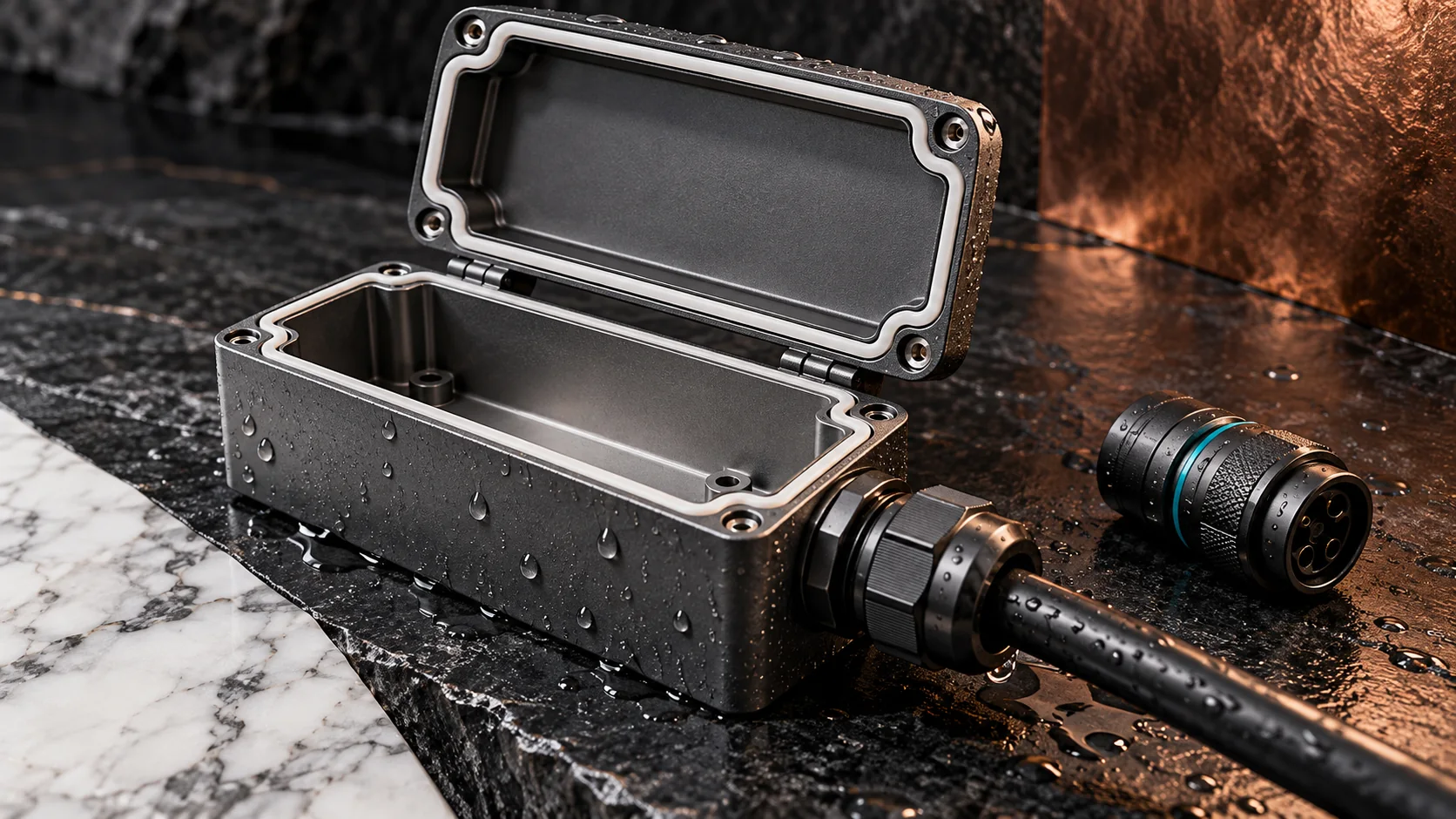
The sensor was advertised for a demanding environment, yet moisture appears inside its installed housing after cleaning. The weak point may not be the sensor body. A mismatched connector, unsuitable cable entry, damaged seal, or unreviewed cleaning chemical can undermine an otherwise plausible selection.
Review the whole installed assembly against the real environment. Record washdown, dust, temperature, condensation, chemicals, and every interface that completes the installation. An ingress rating answers a defined protection question; it is not automatic evidence of chemical compatibility, hygienic design, food-contact suitability, or hazardous-location approval.
Describe the actual exposure
Start with the operation rather than a requested rating. Where is the device mounted? What cleaning procedure applies? What liquids, chemicals, dusts, temperature changes, and mechanical stresses can reach it? Use the site's actual approved procedure and product information, not a generic washdown label.
Separate external water exposure from internal condensation. Temperature cycling can create a different problem from direct spray. Record the observed failure condition and ask the manufacturer or qualified engineer which design measures are appropriate. Do not assume a more impressive exterior rating resolves every moisture mechanism.
Inspect the complete path: sensor housing, enclosure, lid, seal, fasteners, connector, cable, gland, conduit interface, and mounting arrangement. Include the installed state of unused openings. The suitability review cannot stop at the most prominent component on the purchase order.
Read ratings within their scope
IP and NEMA enclosure designations are not interchangeable promises. NEMA's technical bulletin on liquid-tight conduit and fittings explains differences between the systems and discusses the role of the combined conduit, fitting, and enclosure arrangement in that application.
Use the applicable current product documentation and installation instructions to establish what has actually been assessed. Do not convert a marketing phrase into a certification for a custom assembly. A component's published rating does not by itself validate modifications or the way it was installed.
Chemical resistance also depends on the specific materials, exposure, concentration, temperature, and cleaning practice. Obtain appropriate compatibility information rather than treating corrosion resistance as immunity to every cleaning agent. Food-contact, hygienic, and hazardous-area questions need their own qualified reviews where applicable.
- Describe exposureRecord the actual cleaning, moisture, dust, and chemical context.
- List the assemblyInclude every housing, seal, connector, and cable interface.
- Review the evidenceCheck rating scope, compatibility, and installation instructions.
- Verify the installationRecord qualified acceptance and triggers for renewed review.
Investigate one washdown failure
Consider a hypothetical processing area where a sensor assembly stops reporting after routine cleaning. The installed-assembly register is the source of truth for the approved configuration, linked to component documents, installation evidence, and the site's maintenance records.
Qualified personnel make the equipment safe under the established procedure before inspection. They find moisture and identify an installed connector that differs from the approved bill of materials. The finding is recorded as a candidate failure contributor, not conclusive proof of every mechanism involved.
The engineer compares the actual cleaning exposure, connector documentation, cable entry, seal condition, and assembly instructions. Procurement cannot close the issue by ordering another sensor with the same body rating. The approved corrective action addresses the installation as a system and includes a suitable verification plan.
Suppose eight assemblies use the same sensor, but three have the alternate connector. That identifies three configurations needing review, not five installations proven safe. The team checks the rest against the defined exposure and evidence. If a configuration cannot be established, it remains unresolved until inspected or otherwise verified.
After authorized corrective work, the responsible reviewer records the installed components and verification outcome. Cleaning and operating staff receive any approved limitations. If the environment later changes, such as a different cleaning product or procedure, the configuration record makes the need for a renewed suitability review visible.
Build an installed assembly checklist
Include these evidence groups:
- Environment: location, water and dust exposure, cleaning reference, chemicals, temperatures, condensation, and mechanical conditions.
- Components: exact sensor, enclosure, seal, connector, cable, gland, fittings, and mounting references.
- Documentation: relevant rating scope, compatibility information, manufacturer instructions, and unresolved questions.
- Installation: actual configuration, permitted modifications, inspection evidence, and responsible installer.
- Decision: qualified acceptance for the stated environment, limitations, maintenance checks, and change triggers.
Record replacement parts as configuration changes, too. A maintenance substitution can alter the connector, seal material, or cable entry without changing the sensor model. Link the replacement to its exact documentation and the person who reviewed it. Otherwise the original acceptance record may remain green while the physical assembly it described no longer exists.
Avoid an overall suitable badge when one essential interface has no supporting information. A procurement checklist should make that uncertainty easier to resolve before purchase, not hide it after installation.
Use AI for document comparison rather than approval
Ordinary configuration management can identify missing component references and differences from the approved assembly. AI can extract candidate specifications or summarize questions for a manufacturer, with each statement linked to its source. It should not invent a rating, certify a custom assembly, or recommend unapproved sealing modifications.
Start with an installation that has experienced a real environmental problem. Reconstruct the entire assembly and exposure before choosing a replacement. Measure incomplete configuration records and repeat failures after verified corrective work. The useful improvement is an installation selected for the environment it actually faces, not a more impressive label on one component.
Sources & further reading
Primary references checked October 19, 2026. Examples are illustrative, not reported client outcomes.
- NEMA's technical bulletin on liquid-tight conduit and fittingsPrimary background for the linked discussion. Use the actual application, current product documents, and qualified review for operating or acceptance decisions.