

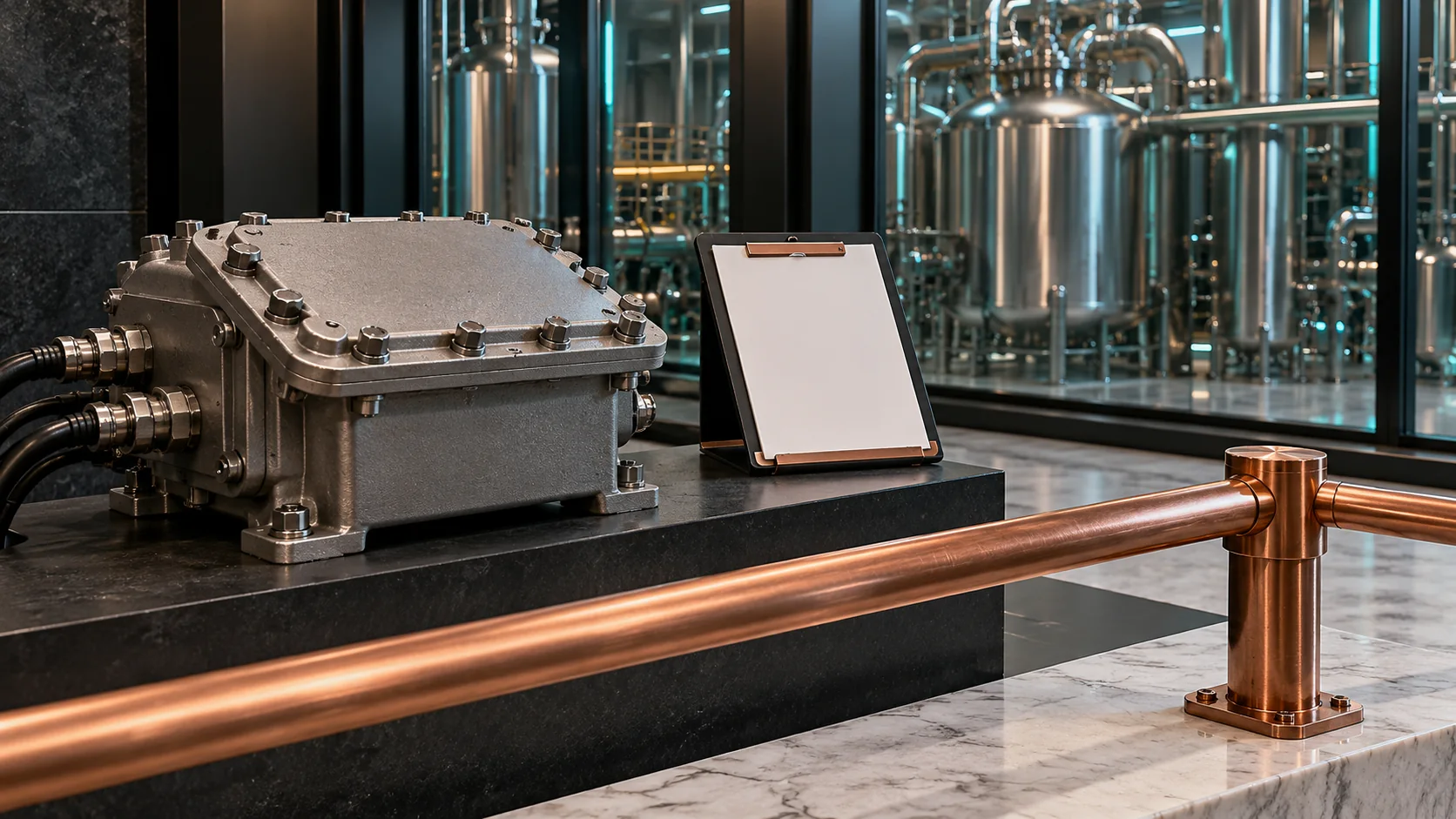
A team wants to add a small wireless sensor near a process area. It runs from a battery and comes in a weather-resistant case, so the purchase looks straightforward. Neither feature establishes that it is suitable for a location where an ignitable atmosphere or combustible material may be relevant.
Stop procurement at a qualified location-and-equipment review. Establish the applicable classification documentation, equipment approval evidence, installation constraints, and responsible decision maker before ordering or testing. This article describes that review gate. It is not a method for classifying an area, selecting a protection technique, or installing equipment in a hazardous location.
Begin with the site rather than the device
Ask the site's qualified responsible person for the classification and applicable engineering documentation. If the area status is unresolved, record that as a blocker. Do not assume an ordinary location because the project team cannot find a drawing or because an existing device appears similar.
OSHA 1910.307 provides a U.S. general-industry reference addressing hazardous classified locations and electrical installations. Its scope and the site's applicable requirements must be assessed by qualified people. Other jurisdictions and facilities can use different codes, approval systems, and responsibilities.
The review needs the actual intended mounting point and use, not a broad label such as near the tank. Boundaries and relevant conditions must come from the responsible site process. A purchasing team or language model should never generate a classification from a brief description and treat it as approved engineering.
Match the complete proposal to the approval evidence
Obtain the exact device model, configuration, markings, certificates or other required approval information, and manufacturer instructions. Include accessories, batteries, antennas, connectors, associated equipment, and any permitted installation arrangement. A certificate for a different variant is not evidence for the selected one.
The qualified reviewer determines whether the proposed equipment and installation satisfy the relevant location conditions and requirements. A weatherproof enclosure is not equivalent to hazardous-location suitability. Low power does not create a blanket exemption, and a familiar radio protocol does not establish approval.
Keep documentation versions and unresolved questions with the proposal. If a manufacturer or competent authority must clarify a limitation, procurement should see that dependency. A pending question must not disappear when the quote is converted to a purchase order.
- Identify site authorityObtain the controlled location documentation and qualified reviewer.
- Specify the proposalRecord the exact device, accessories, and intended use.
- Resolve evidenceReview approvals and manufacturer constraints before procurement.
- Authorize the next stageRetain conditions or stop the proposal if suitability is unresolved.
Review a proposed monitoring addition
Consider a hypothetical facility proposing a wireless temperature monitor beside a process vessel. The pre-procurement register is the source of truth for the proposal and review status. It links the site's authorized classification reference and the exact candidate documentation without copying restricted drawings into a public system.
The project engineer finds that the vendor's quotation describes a product family rather than the exact approved configuration. The review remains pending. Procurement requests the correct variant and documentation, while the site reviewer checks the proposed location and intended use through the established process.
The team does not bring a demonstration unit into the area to test whether it works. OSHA's technical manual discusses confirming instrument suitability before use in hazardous locations. Functional success in a trial would not resolve approval in any case.
When the required evidence is available, the qualified parties record their decision and any conditions for the next authorized stage. If suitability cannot be established, the proposal stops or changes through engineering review. A possible alternative location or measurement arrangement is another proposal to assess, not a workaround the software can approve.
The business outcome is a clear procurement decision with an accountable owner. It may be a rejection or a request for more engineering information. Avoiding an unsuitable purchase is progress even though no sensor has yet been installed.
Build a pre-procurement evidence checklist
The checklist should show:
- Site authority: responsible qualified reviewer, applicable jurisdiction, and controlled classification reference.
- Intended use: mounting location, measurement purpose, operating conditions, and project scope.
- Exact equipment: model and configuration, relevant markings and approval records, and document versions.
- Assembly constraints: accessories, associated equipment, manufacturer limitations, and permitted arrangements for review.
- Open questions: missing evidence, responsible respondent, and the consequence for procurement.
- Decision: named authority, reviewed scope, conditions, and the next separately authorized stage.
Do not present this checklist as a self-certification form. It organizes the evidence for the people with the necessary competence and authority. Installation, inspection, maintenance, and later modification remain subject to their own applicable controls.
Use AI to identify missing documents
Ordinary workflow tools can hold procurement while required reviews are unresolved. AI can compare a document list with the requested evidence and draft vendor questions. It should not classify the site, authenticate approval from an image alone, select an installation technique, or authorize use.
Begin with a proposal before it becomes a purchase commitment. Measure missing configuration evidence and reviews bypassed during procurement. The goal is a clean boundary between enthusiasm for better monitoring and the qualified decision about whether that equipment belongs in that location at all.
Sources & further reading
Primary references checked October 19, 2026. Examples are illustrative, not reported client outcomes.
- OSHA 1910.307Primary background for the linked discussion. Use the actual application, current product documents, and qualified review for operating or acceptance decisions.
- OSHA's technical manual discusses confirming instrument suitability before use in hazardous locationsPrimary background for the linked discussion. Use the actual application, current product documents, and qualified review for operating or acceptance decisions.